What was the first thing you did when lockdown measures were lifted? I went to a museum.
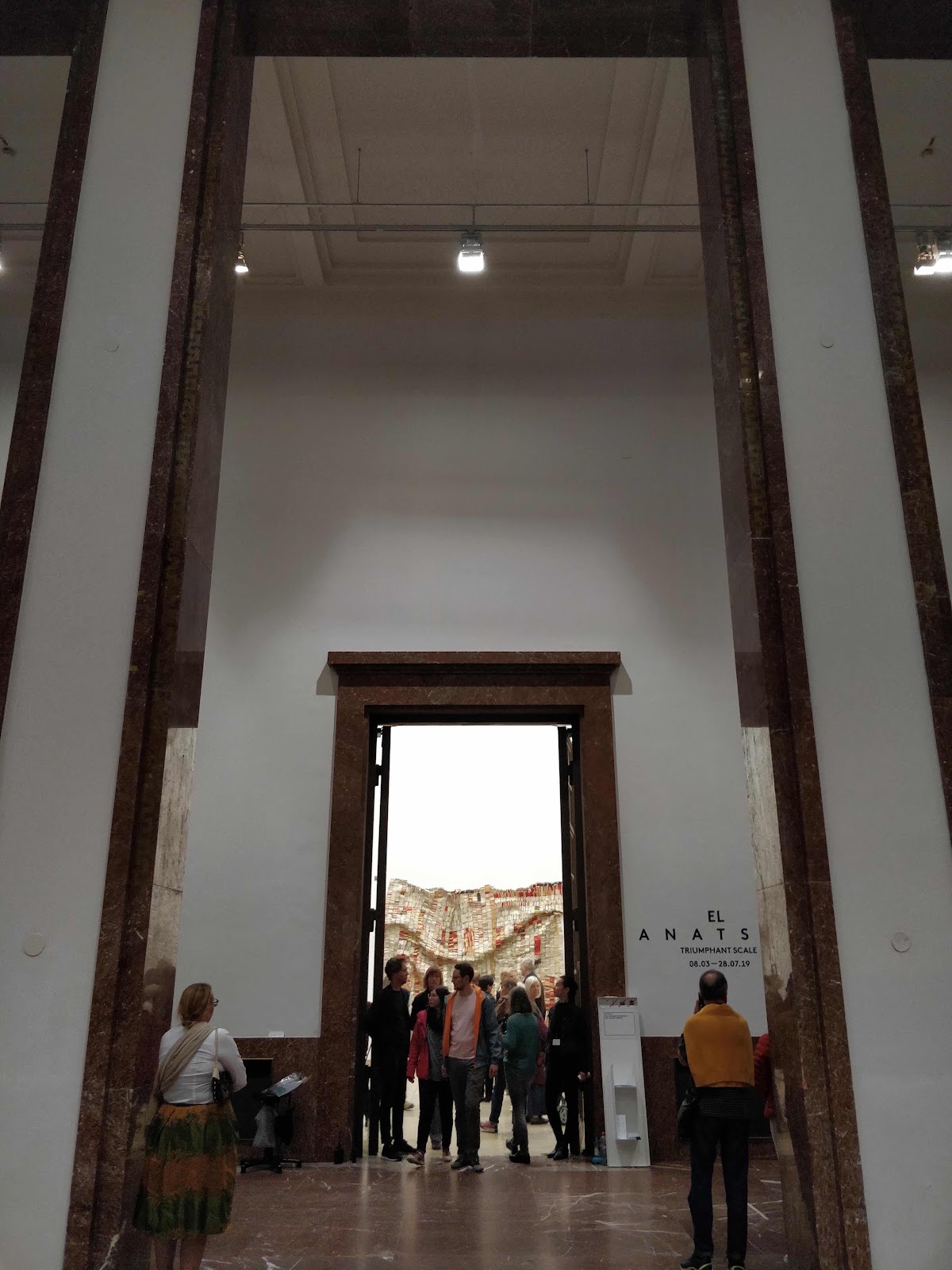
Admittedly, I had already seen El Anatsui‘s retrospective exhibition „Triumphant Scale“ in summer 2019 at the
Haus der Kunst in Munich. It was free entry after 6 pm on this particular Friday evening and the place was heaving with visitors. El Anatsui‘s expansive works found a home in the cavernous exhibition rooms at the Haus der Kunst, and I wondered how they would replicate a sense of enormity and the „triumphant scale“ in the smaller
Kunstmuseum in Bern.
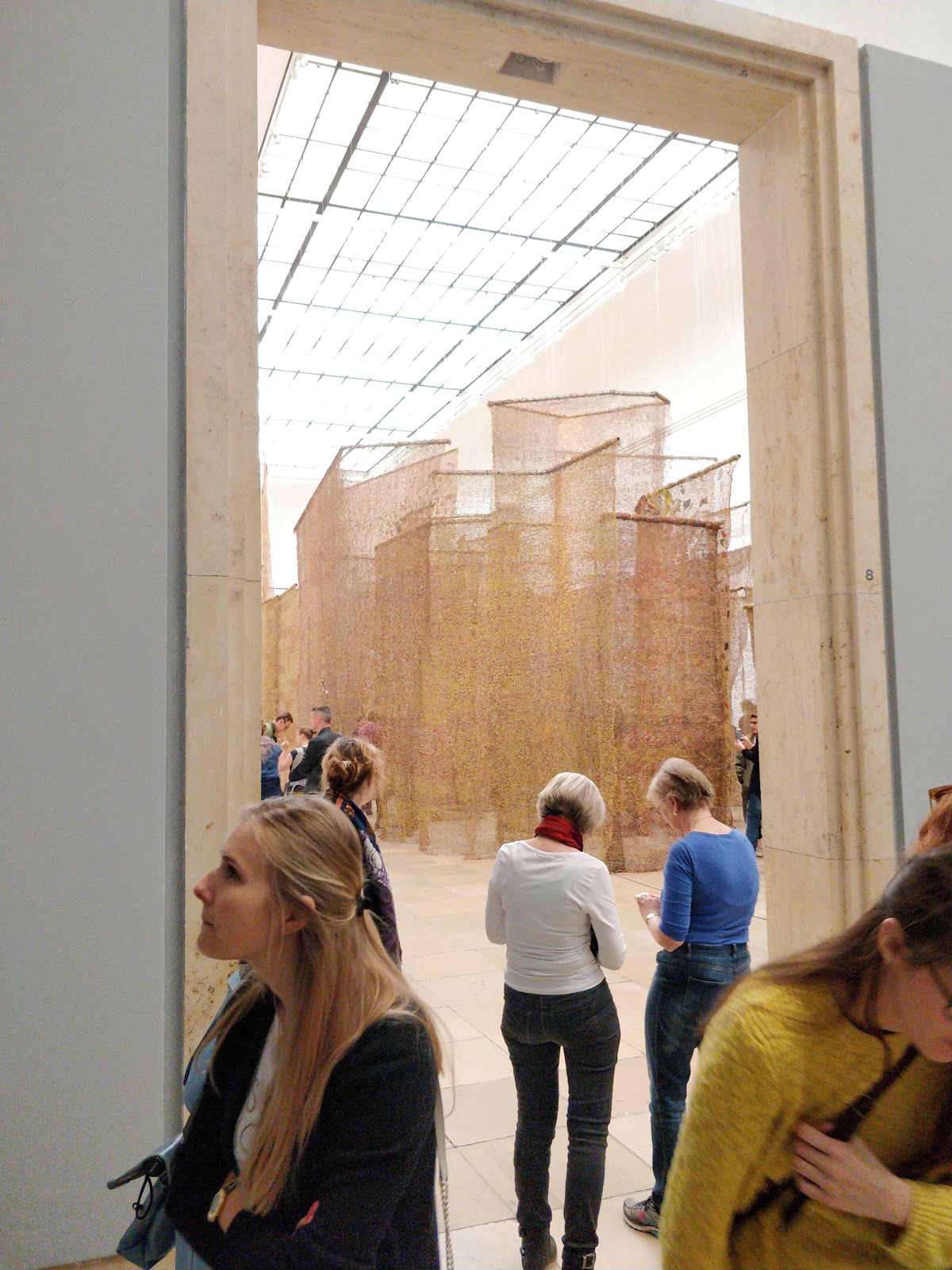
The Kunstmuseum space is smaller and not all of the works shown in Haus der Kunst made their way to Bern. However, there is still a sense of enormity and expansion, despite the more intimate space. There were tall ceilings, and shutter windows of the main exhibition spaces, that are usually closed to protect paintings displayed in that space, were thrown open to maximise the use of natural light. Extra walls were built as reinforcement for the extra-large pieces to hang — I suppose lightweight aluminium can get heavy when you‘re dealing with thousands of pieces of them ...
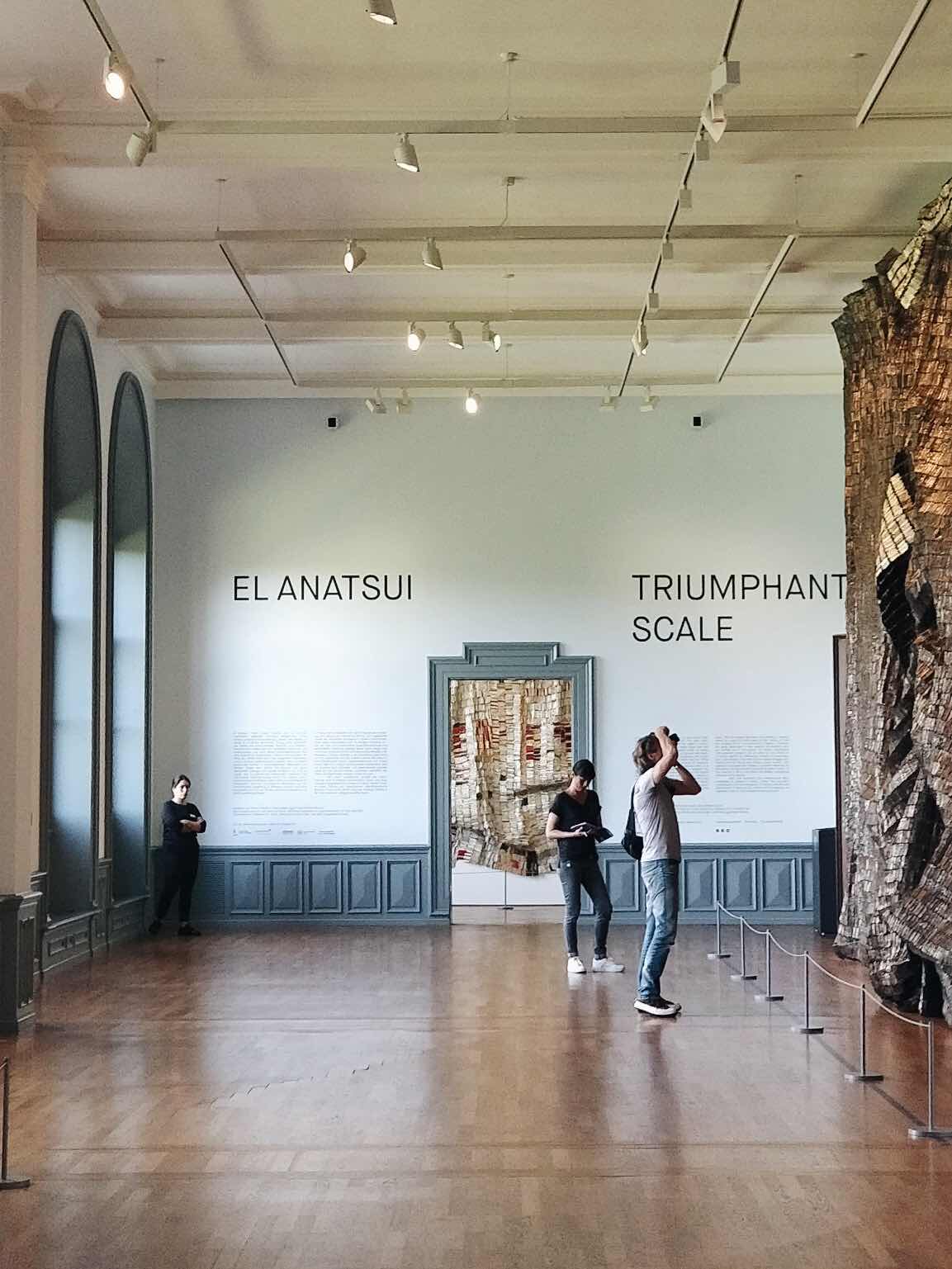 | | The first rooms of the Kunstmuseum Bern exhibition |
|  | | M admiring „In the world but we don‘t know the world“ |
|
If you‘re not familiar with the artist or his works, El Anatsui is a contemporary Ghanaian artist who uses the materials of the world around him to create monumental sculptures. His most familiar works are those made of thousands of flattened and shaped metal pieces from bottles or cans, sewn together with copper wire, with a visual fluidity, as if they were soft fabrics draped like a curtain. Other works are wooden sculptures on which he uses a chainsaw to hack delicate designs and patterns. 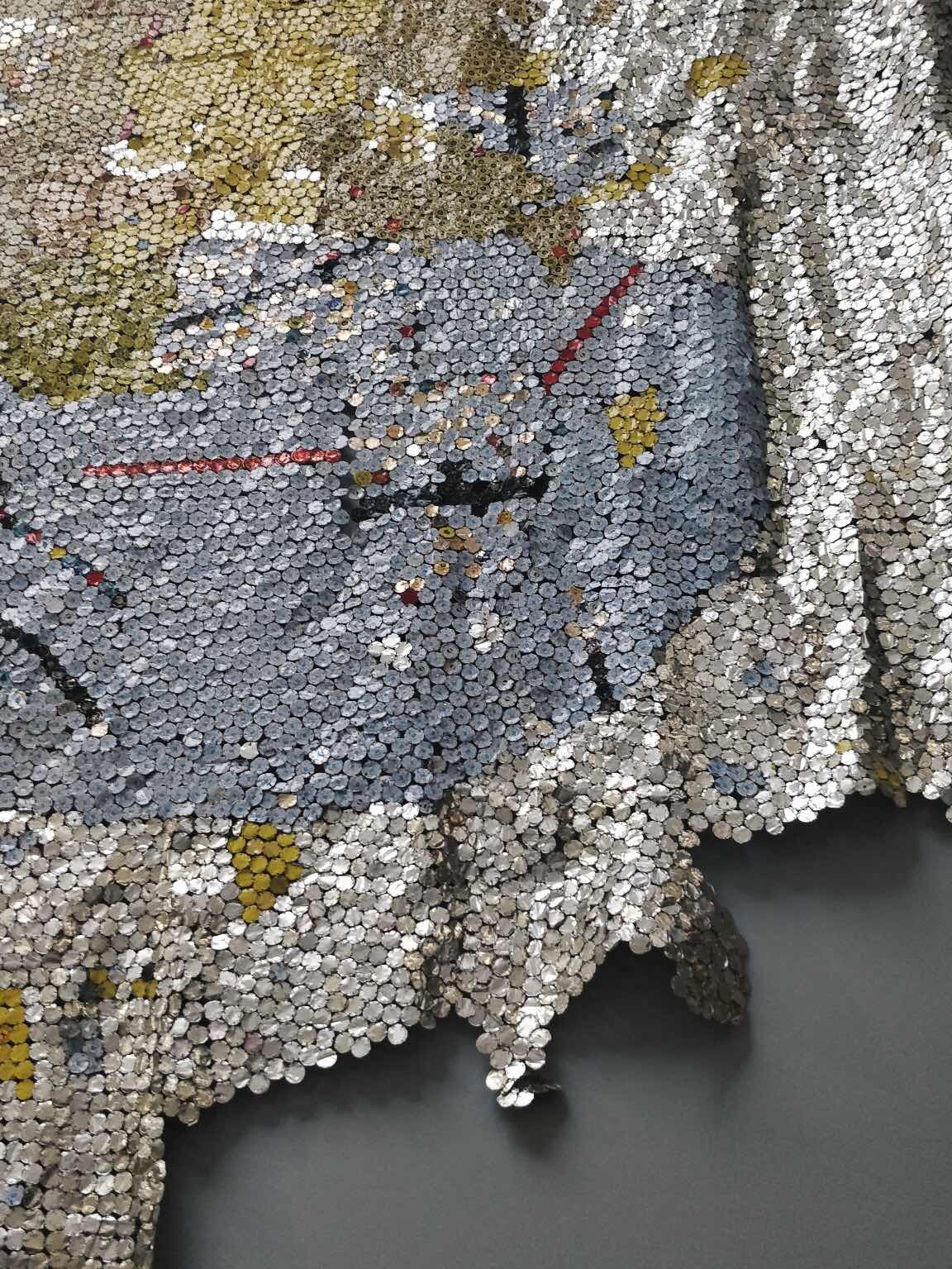 | | Detail from „Gravity and grace“ |
|
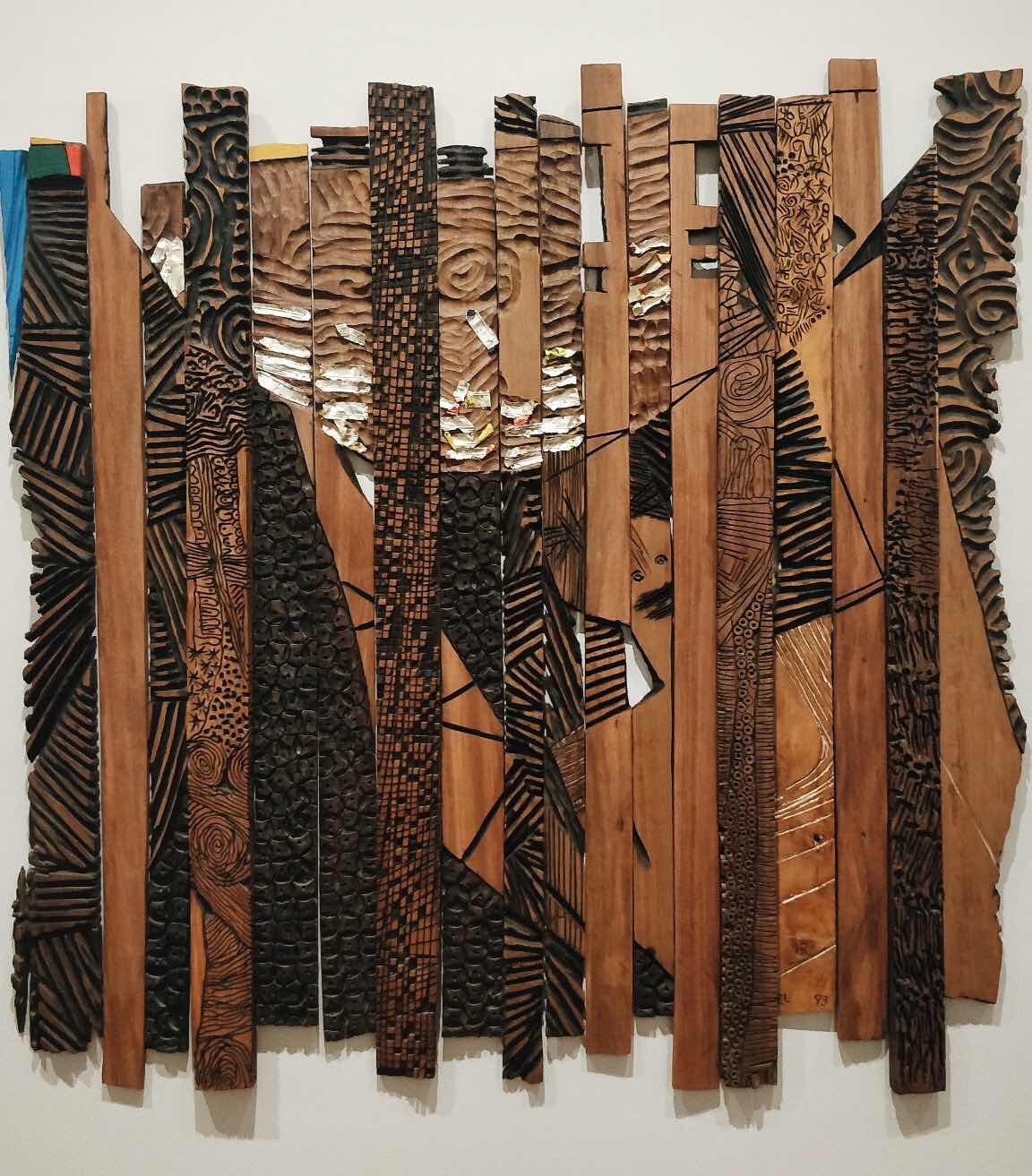 |
„Harvest Moon“
|
The work „Man‘s Cloth“ and is on loan to the exhibition from the British Museum, my former workplace. It usually hangs in the windowless basement level African galleries, displayed in a pride of place and visible as soon as you enter the dimmed gallery space. It‘s freely suspended (not against the wall as we see in the Kunstmuseum Bern) amongst other works of contemporary works from artists hailing from around the African continent.
 |
| Image from the British Museum facebook page |
It also hangs in a pride of place in the Kunstmuseum Bern, this time in a room of its own. The windows are open to let in the natural night and, as it is the only work displayed in this space, the visitor has a chance to sit down and take it all in for what it is. The work is no long viewed within the broader context of contemporary African art and focuses in on El Anatsui, his artistic practice and the messages the he wants to convey with his work. The title „Man‘s Cloth“ refers specifically to its resemblance of a treasured piece of textile, woven in colourful patterns and draped on a man of status. I loved seeing this work receiving the undivided attention it deserves.
 |
Visitors discussing „Man‘s Cloth“
|
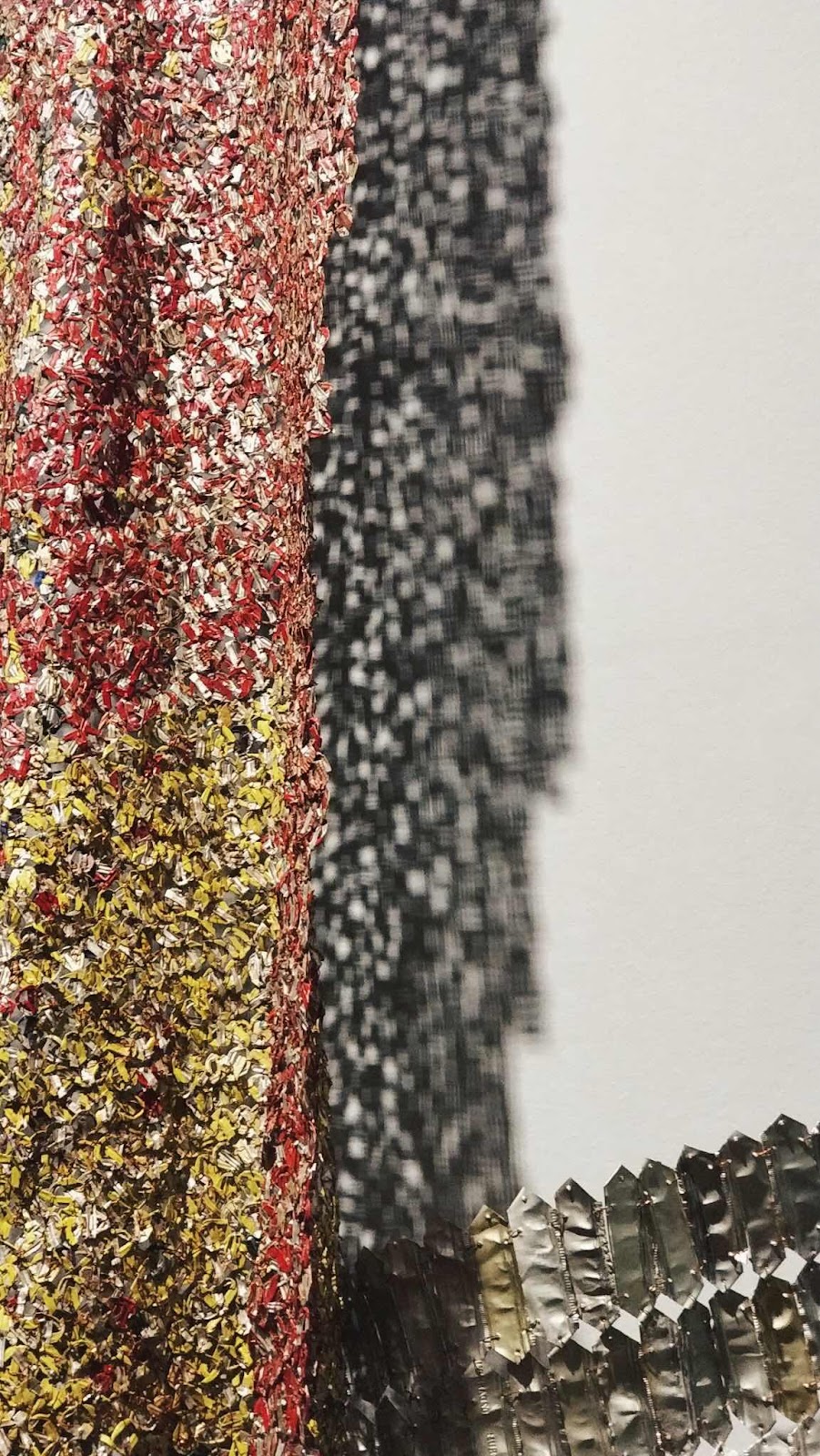
El Anatsui‘s works are also a commentary on the complex history of European empire and colonialism, slavery and the socio-economic effects that reverberate in todays‘ society. The large hanging metal sculptures are entirely made of small pieces of metal - old bottle caps and strips of metal that used to wrap around the bottle neck, which you see in the photo below, a detail from. „Man‘s Cloth.“

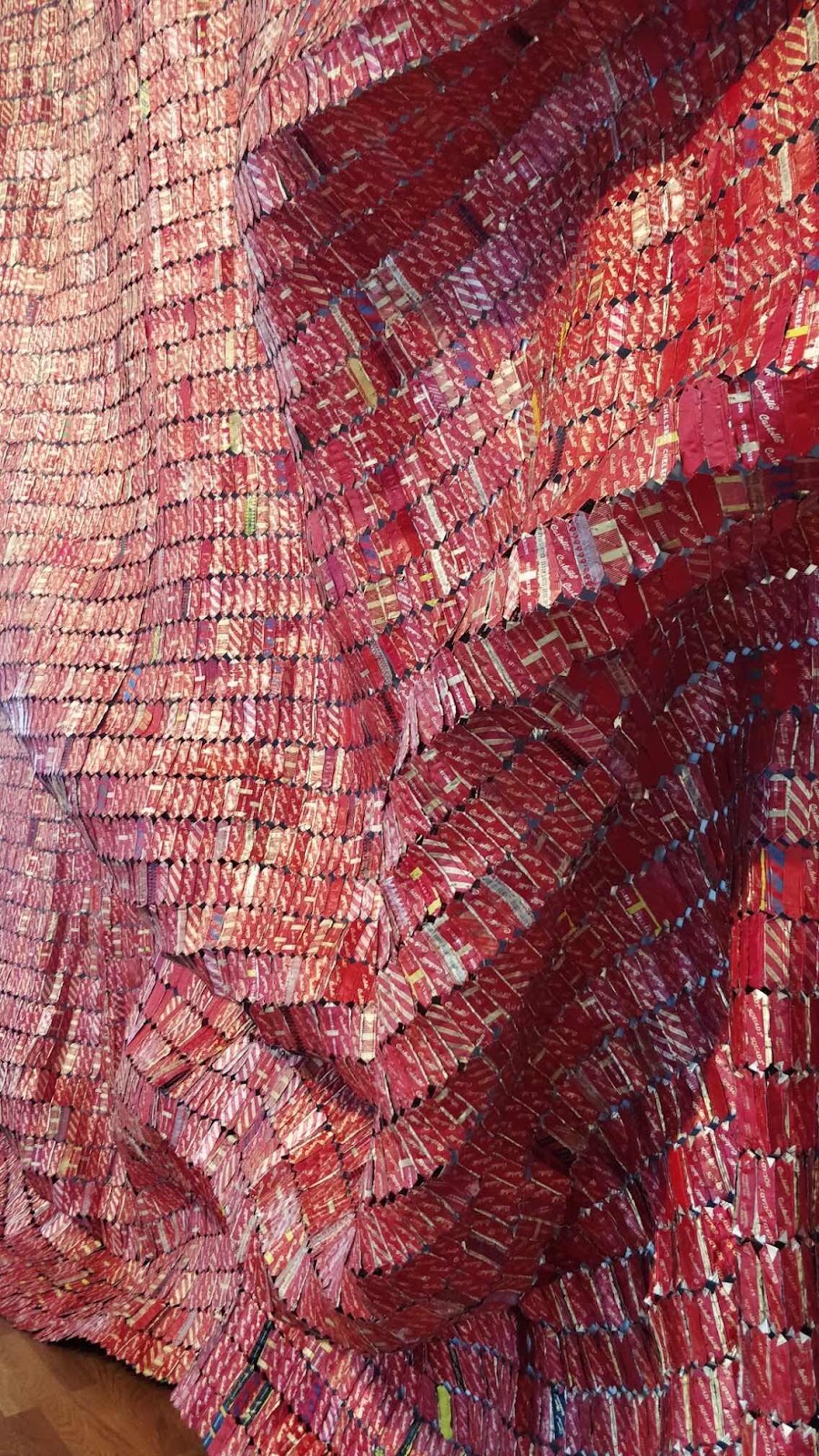
The large-scale work „Red Block“ is made up entirely of metal pieces from Castello rum bottles. The slave labour that was exported from El Anatsui’s home region of West Africa to the Caribbean to labour and toil the sugar plantations, the key ingredient for rum, which is then exported to Europe, and then further exported back to West Africa with European colonial power. „Red Block“ it is a visual testament of this twisted cycle of economic history, colonial power, and labour and production of goods. Even the production of this work requires labour — 60 or so assistants in El Anatsui‘s studio flatten each metallic piece and sew them together with copper wire in the specifications of the artist. 15,000+ pieces of Castello rum labels make up this one piece of work.
Many say that El Anatui‘s work is using recycled material — which is an interesting statement to make, as such material used here is not remade to be used for a similar form or function as its original intention. The artists instead says that these materials are transformed, from every-day objects or even rubbish into complex works of art with a different identity.
Metal pieces flattened and twisted to resemble hair ...
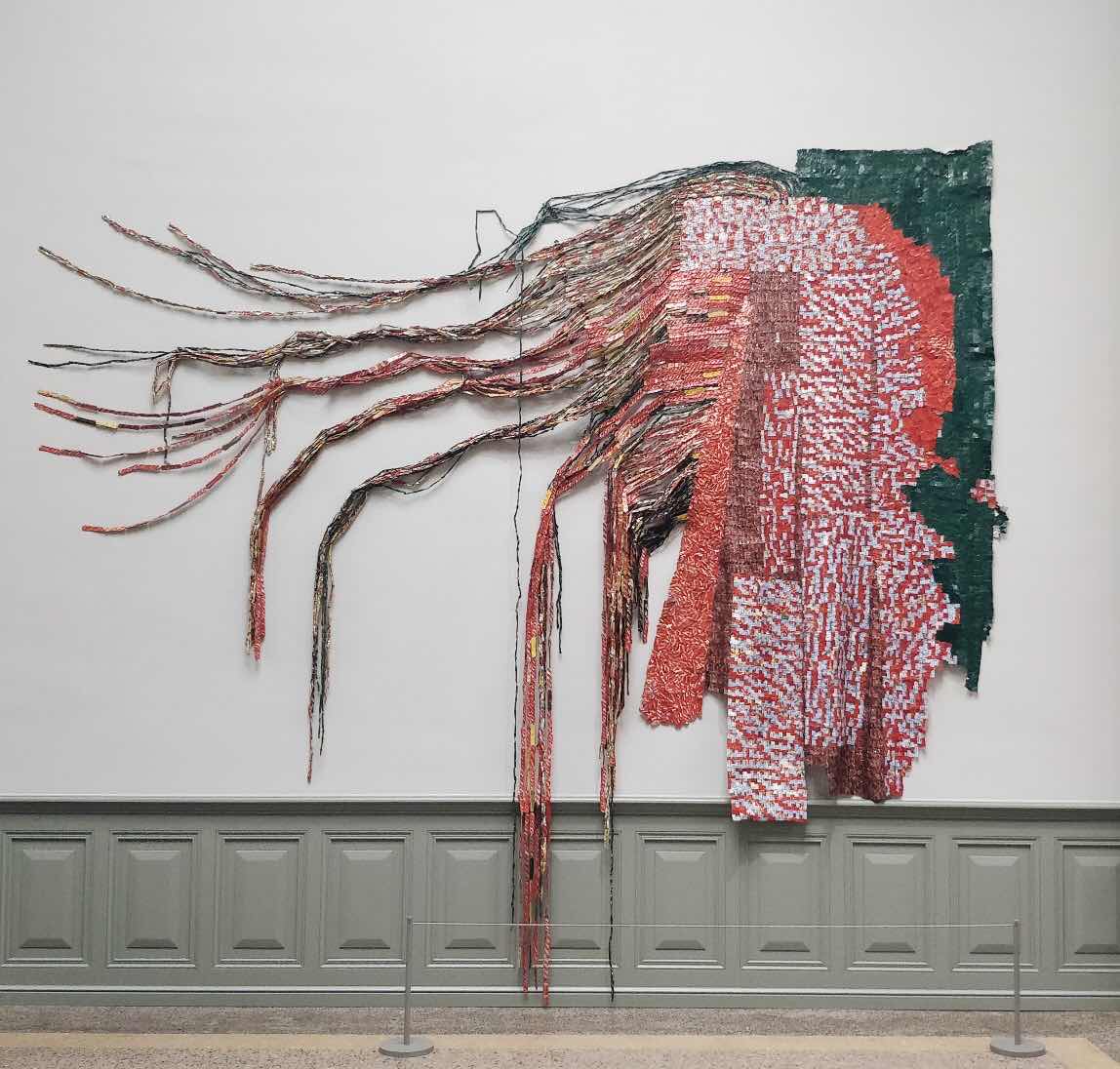
... or a net fabric with a delicate open weave ... or „patches“ for a large piece of cloth ...

„Triumphant Scale“ had just opened to visitors on 12 March, a few days before lockdown measures took place in Switzerland. Throughout the lockdown period, the museum staff kept up with their digital content, producing a 12-part video series of key works. It was a bit surreal to see a museum so empty, but it felt like such a treat, like your own private curator‘s tour after hours. You can find the video playlist on YouTube
here (German with English subtitles).
The museum education team has also incorporated the exhibition into their workshop offerings. I regularly participate in their „
Kunst Rundum“ series, a monthly afternoon workshop exploring the themes of a current exhibition through creating one‘s own pieces and experimenting with techniques. The August workshop focused on El Anatsui, and we made our own prints using colour and patterns inspired by the exhibition.
The Kunstmuseum Bern has understandably extended the exhibition until November, so there‘s still some time to check out these breathtaking artworks. There‘s much more than what I‘ve shared here — including some impressively intricately carved wooden sculptures and pages of sketches and works on paper.







Comments
Post a Comment